others
Pounded: Meaning, Uses, and Everyday Contexts Explained

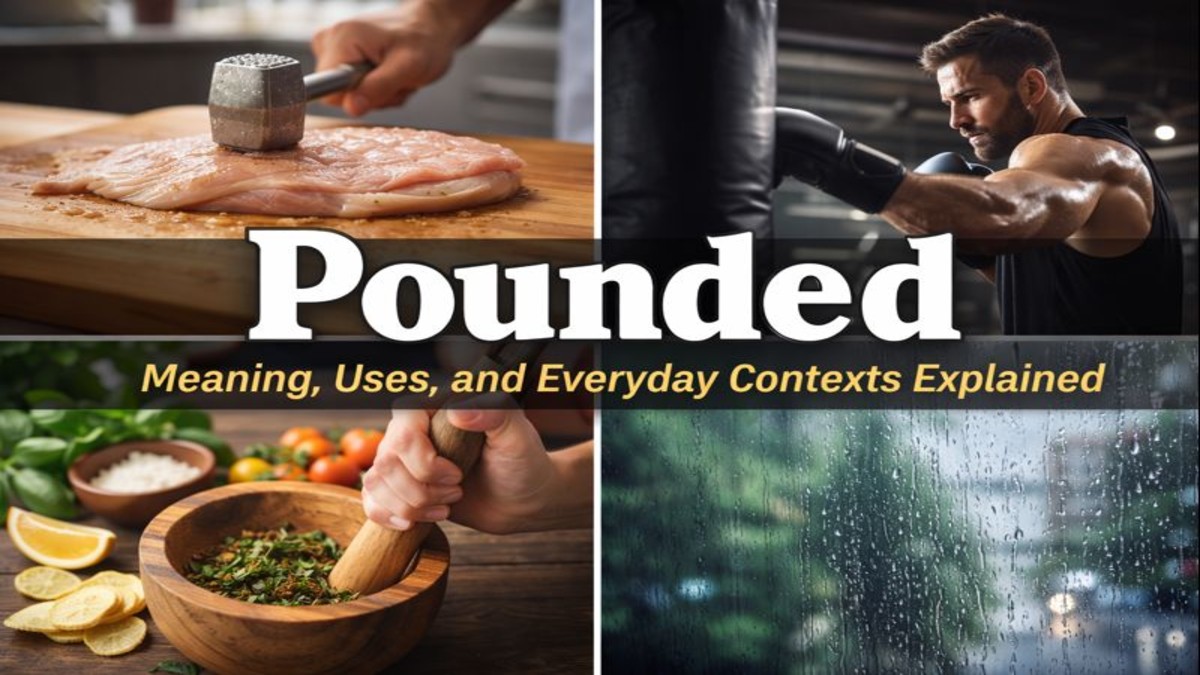
The word pounded is short, strong, and surprisingly versatile. You’ll hear it in kitchens, gyms, sports commentary, and even emotional conversations. One word many meanings. So what does “pounded” really mean, and how do you use it correctly without sounding confusing?
Let’s break it down in plain, everyday English.
What Does “Pounded” Mean?
At its simplest, pounded is the past tense of pound, meaning to strike repeatedly with force.
Literal Definition
To pound means to hit, beat, or strike something hard and repeatedly. When something is pounded, it has already gone through that action.
Grammatical Forms
- Present: pound
- Past: pounded
- Continuous: pounding
It works as both a verb and an adjective depending on context
Origins of the Word “Pounded”
Historical Background
The word traces back to Old English pundian, meaning to beat or strike. Over time, it evolved to include broader meanings physical, emotional, and even numerical.
Common Meanings of Pounded
This is where things get interesting.
Physical Action
This is the most literal use. A nail is pounded into wood. Dough is pounded flat. The action is forceful and repetitive.
Measurement and Weight
“Pounded” can also relate to weight. For example, a two-pound steak was pounded thin. Here, it describes preparation, not force alone.
Emotional and Figurative Use
Ever heard someone say, “I was pounded by bad news”? No fists involved—just emotional impact. The word signals intensity.
Pounded in Cooking and Food
Why Foods Are Pounded
Pounding food tenderizes it, flattens it, or helps flavors soak in better. Think of it as preparing ingredients for their best performance.
Popular Pounded Dishes
- Pounded chicken cutlets
- Schnitzel
- Pounded yam
- Flattened meat for stir-fry
In food, “pounded” often equals tender and ready.
Pounded in Fitness and Sports
Workouts and Physical Strain
Athletes often say, “My legs are pounded.” This means they’re exhausted or sore—not injured. It’s a badge of effort, not defeat.
Pounded in Everyday Language
Slang and Informal Usage
In casual speech, pounded can mean overwhelmed or defeated. A team can get “pounded” in a game. A person can feel “pounded” after a long day.
Context Matters
Tone changes everything. In sports, it’s competitive. In work life, it might mean stress. Same word—different vibe.
Pounded vs Similar Words
Beaten
“Beaten” can be physical or competitive but often sounds less intense than pounded.
Crushed
“Crushed” suggests finality or emotional impact, while “pounded” emphasizes repeated force.
How to Use “Pounded” Correctly in Sentences
- The garlic was pounded into a paste.
- He felt pounded after the marathon.
- The team was pounded in the final quarter.
Clear subject. Clear context. No confusion.
Common Mistakes to Avoid
- Using it without context
- Overusing it in formal writing
- Mixing literal and figurative meanings in one sentence
Clarity keeps the word powerful.
Pounded in Idioms and Expressions
Language loves vivid imagery, and pounded delivers exactly that.
Common Idiomatic Uses
- “Pounded into submission” – suggests repeated pressure until someone gives in
- “Heart pounding” – describes excitement, fear, or anticipation
- “Pounded the pavement” – means actively searching or working hard
These expressions rely on the idea of repetition and intensity, not violence.
Why Idioms Use “Pounded”
Because the word feels physical. Even when nothing is being hit, the listener feels the impact. That’s powerful language at work.
Pounded in Professional and Creative Writing
Journalism and Storytelling
Writers use pounded to add urgency:
- Rain pounded the city all night
- Questions pounded his mind
It creates movement. Static sentences suddenly feel alive.
When to Avoid It
In formal or academic writing, “pounded” can sound too dramatic. In those cases, softer alternatives like impacted, affected, or applied force may work better.
Cultural Perception of the Word “Pounded”
Different cultures interpret intensity differently.
Western English Usage
In American and British English, pounded is common in sports, food, and emotional talk.
Global Understanding
Even non-native speakers quickly grasp the meaning because the word mimics the action it describes. It sounds forceful—and that’s universal.
Conclusion
“Pounded” is a small word with heavyweight meaning. From food prep to feelings, fitness to failure, it carries intensity wherever it goes. Use it thoughtfully, and it adds punch to your language—use it carelessly, and it can sound confusing. Like a hammer, it’s all about how you swing it.
FAQs
1. Is “pounded” formal or informal?
It’s mostly informal but acceptable in descriptive writing.
2. Can “pounded” be emotional?
Yes, it’s often used to describe emotional exhaustion or stress.
3. Is “pounded” negative?
Not always. In cooking or fitness, it can be positive.
4. What’s the difference between pounded and beaten?
Pounded emphasizes repeated force; beaten is broader.
5. Can “pounded” describe food preparation?
Absolutely—especially meat, grains, and root vegetables.

Dobutamine: Uses, Mechanism, Dosage, and Side Effects
Nopdle Magazine: Redefining Creative Culture Through Curated Innovation

Shop Easter Basket: The Ultimate Guide to Perfect Easter Gifts

Best Apps to Make Money Online USA (2026 Guide)

How to Start Affiliate Marketing with No Money

Freelance Jobs for Beginners USA (Start with No Experience)

Side Hustle Ideas from Home USA (No Experience Needed) – Beginner’s Guide

Online Jobs from Home USA (Daily Pay) – Start Earning Instantly

Beton Celular Autoclavizat: The Future of Lightweight, Eco-Friendly Construction

Goblets: A Timeless Symbol of Elegance and Celebration
Dobutamine: Uses, Mechanism, Dosage, and Side Effects

Ishraq Time in Delhi: What It Is, When It Happens, and Why It Matters
Beton Celular Autoclavizat: The Future of Lightweight, Eco-Friendly Construction

Read OPM Manga Online: Where and How to Enjoy One Punch Man Legally

Technisches Gymnasium: Your Gateway to Engineering and Technology

Why Every Small Business Needs a Digital Marketing Agency
Goblets: A Timeless Symbol of Elegance and Celebration
Nopdle Magazine: Redefining Creative Culture Through Curated Innovation

Gold Shower: Nature’s Cascading Yellow Wonder

The Indian Bow: A Legacy of Precision, Power, and Tradition
Dobutamine: Uses, Mechanism, Dosage, and Side Effects
Nopdle Magazine: Redefining Creative Culture Through Curated Innovation
Shop Easter Basket: The Ultimate Guide to Perfect Easter Gifts
Best Apps to Make Money Online USA (2026 Guide)
How to Start Affiliate Marketing with No Money
Freelance Jobs for Beginners USA (Start with No Experience)
Side Hustle Ideas from Home USA (No Experience Needed) – Beginner’s Guide
Online Jobs from Home USA (Daily Pay) – Start Earning Instantly
Beton Celular Autoclavizat: The Future of Lightweight, Eco-Friendly Construction
Goblets: A Timeless Symbol of Elegance and Celebration

 entertainment7 months ago
PYT Telegram: A Complete Guide to Understanding, Using, and Maximizing It

 entertainment7 months ago
OnionFlix: Everything You Need to Know About This Streaming Website
- others6 months ago
Nook vs Kindle: Which E-Reader Is Right for You?
- gaming7 months ago
Melisandre: The Enigmatic Priestess of Game of Thrones