Health
Preload vs Afterload: Understanding the Heart’s Hidden Forces

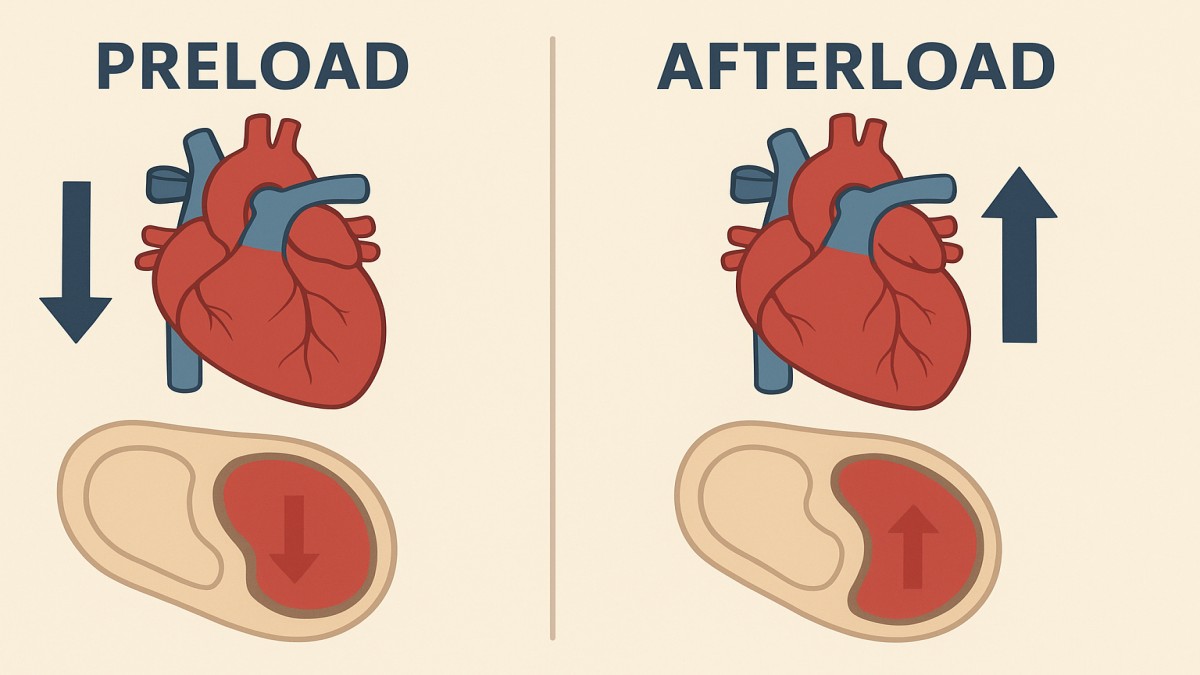
Preload vs Afterload. When you think about how the heart works, you might imagine it simply pumping blood like a small mechanical engine. But behind this simple action are two crucial forces: preload and afterload. These two factors determine how hard the heart works, how much blood it pumps, and how efficiently it keeps you alive. In this article, we’ll break down preload and afterload in the simplest, clearest way—so you never confuse the two again.
What Is Preload?
Definition
Preload is the initial stretching of the heart muscle (ventricles) before it contracts. It depends mainly on the amount of blood returning to the heart.
In simple words:
Preload = how much the heart fills.
How Preload Affects Heart Function
The more the ventricles fill with blood, the more they stretch, and the stronger the contraction becomes. This is known as the Frank-Starling law.
Think of it like stretching a rubber band—stretch it more, and it snaps back harder.
Factors That Increase Preload
- Increased blood volume
- Slow heart rate (more filling time)
- IV fluids
- Mitral valve regurgitation
- Heart failure (backed-up blood increases stretch)
Factors That Decrease Preload
- Blood loss
- Dehydration
- Diuretics (water pills)
- Rapid heart rate (less filling time)
What Is Afterload?
Definition
Afterload is the resistance the heart must overcome to pump blood out.
In simple terms:
Afterload = pressure the heart pushes against.
How Afterload Influences the Heart
If afterload is high, the heart has to work harder. Over time, this can make the heart muscle thicker and weaker.
Factors Increasing Afterload
- High blood pressure
- Narrowing of the aortic valve (aortic stenosis)
- Arterial stiffness
- Stress response (increased adrenaline)
Factors Decreasing Afterload
- Vasodilators (nitroglycerin, ACE inhibitors)
- Low blood pressure
- Sepsis (blood vessels relax)
Key Differences Between Preload and Afterload
Mechanisms
- Preload: volume-based
- Afterload: pressure-based
Impact on Stroke Volume
- Increased preload → increased stroke volume
- Increased afterload → decreased stroke volume
Relationship With Blood Pressure
- Preload isn’t directly tied to blood pressure
- Afterload rises as blood pressure rises
How Preload and Afterload Work Together
Balance in Normal Physiology
A healthy heart adjusts preload and afterload automatically to maintain stable circulation.
The Frank-Starling Mechanism
This natural process helps the heart pump more forcefully when preload increases.
Clinical Importance
Heart Failure
- High preload worsens congestion
- High afterload makes pumping harder
Hypertension
The heart constantly pushes against resistance, increasing afterload.
Valve Diseases
- Mitral regurgitation → increased preload
- Aortic stenosis → increased afterload
How Doctors Measure Preload and Afterload
Echocardiography
- Measures ventricular filling
- Assesses ejection fraction
Hemodynamic Monitoring
- Central venous pressure
- Pulmonary capillary wedge pressure
How Medications Affect Preload and Afterload
Diuretics
Reduce preload by removing excess fluid.
Vasodilators
Lower afterload by relaxing blood vessels.
Inotropes
Improve the heart’s pumping strength.
Real-Life Analogy
Think of your heart as a person trying to water plants with a garden hose:
- Preload is how much water fills the hose before you spray.
- Afterload is how hard you must push the water out if someone is stepping on the hose.
More water → strong initial flow (preload).
More pressure → harder to push (afterload).
Conclusion
Preload and afterload are two essential forces that control how efficiently the heart works. Preload focuses on filling, while afterload focuses on resistance. Understanding the difference helps explain many heart conditions—from heart failure to hypertension. By knowing how these forces interact, you get a clearer picture of how your heart manages its workload every single second.
FAQs
1. Is preload the same as blood pressure?
No. Preload is about filling, not pressure.
2. What increases preload in the body?
Extra fluid, slow heart rate, and valve problems.
3. Why is afterload important?
It determines how hard the heart must work to eject blood.
4. Do diuretics affect preload or afterload?
Primarily preload—they reduce fluid volume.
5. Can high afterload cause heart failure?
Yes. Chronic high afterload weakens the heart over time.

Dobutamine: Uses, Mechanism, Dosage, and Side Effects

Nopdle Magazine: Redefining Creative Culture Through Curated Innovation

Shop Easter Basket: The Ultimate Guide to Perfect Easter Gifts

Best Apps to Make Money Online USA (2026 Guide)

How to Start Affiliate Marketing with No Money

Freelance Jobs for Beginners USA (Start with No Experience)

Side Hustle Ideas from Home USA (No Experience Needed) – Beginner’s Guide

Online Jobs from Home USA (Daily Pay) – Start Earning Instantly

Beton Celular Autoclavizat: The Future of Lightweight, Eco-Friendly Construction

Goblets: A Timeless Symbol of Elegance and Celebration
Dobutamine: Uses, Mechanism, Dosage, and Side Effects
Ishraq Time in Delhi: What It Is, When It Happens, and Why It Matters
Beton Celular Autoclavizat: The Future of Lightweight, Eco-Friendly Construction

Read OPM Manga Online: Where and How to Enjoy One Punch Man Legally

Technisches Gymnasium: Your Gateway to Engineering and Technology

Why Every Small Business Needs a Digital Marketing Agency
Goblets: A Timeless Symbol of Elegance and Celebration
Nopdle Magazine: Redefining Creative Culture Through Curated Innovation

Gold Shower: Nature’s Cascading Yellow Wonder

Robert Provost: A Life of Leadership, Community, and Vision
Dobutamine: Uses, Mechanism, Dosage, and Side Effects
Nopdle Magazine: Redefining Creative Culture Through Curated Innovation
Shop Easter Basket: The Ultimate Guide to Perfect Easter Gifts
Best Apps to Make Money Online USA (2026 Guide)
How to Start Affiliate Marketing with No Money
Freelance Jobs for Beginners USA (Start with No Experience)
Side Hustle Ideas from Home USA (No Experience Needed) – Beginner’s Guide
Online Jobs from Home USA (Daily Pay) – Start Earning Instantly
Beton Celular Autoclavizat: The Future of Lightweight, Eco-Friendly Construction
Goblets: A Timeless Symbol of Elegance and Celebration

 entertainment7 months ago
PYT Telegram: A Complete Guide to Understanding, Using, and Maximizing It

 entertainment7 months ago
OnionFlix: Everything You Need to Know About This Streaming Website
- others6 months ago
Nook vs Kindle: Which E-Reader Is Right for You?
- gaming7 months ago
Melisandre: The Enigmatic Priestess of Game of Thrones