Health
Purkinje Fibers: Structure, Function & Clinical Importance

Introduction
Purkinje fibers may sound like something out of a biology textbook, but they’re one of the hidden heroes keeping your heart beating smoothly. These specialized muscle fibers make sure your heart contracts in a precise, coordinated rhythm. Without them, your heartbeat would be chaotic quite literally. Let’s break down what they are, how they work, and why they’re so crucial for life.
Anatomy of Purkinje Fibers
Location Within the Heart
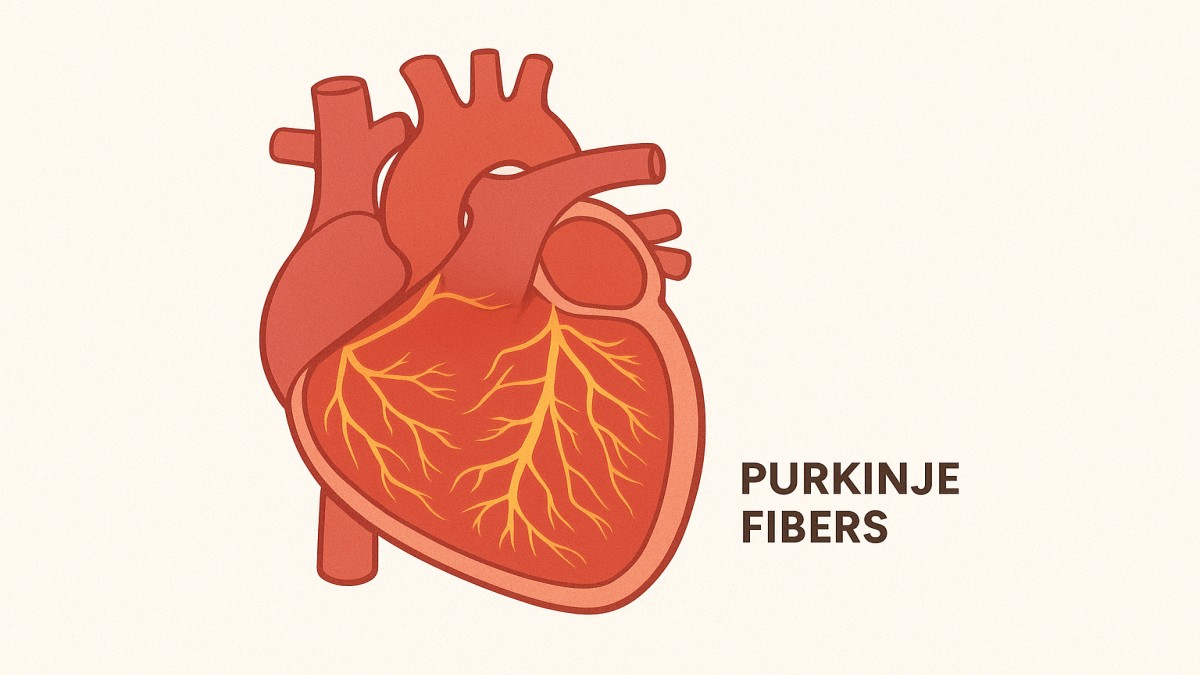
Purkinje fibers sit deep inside the ventricular walls, just beneath the endocardium. They form the final part of the cardiac conduction system, delivering signals that trigger the powerful contractions of the ventricles.
Structural Characteristics
These fibers are larger than typical heart muscle cells. They carry more glycogen and have fewer myofibrils, which helps them quickly transmit electrical signals without being slowed down by heavy mechanical workload.
Composition and Cell Type
Purkinje fibers are modified cardiomyocytes. They aren’t nerves, though they act like them—fast, efficient, and specialized for electrical conduction.
The Role of Purkinje Fibers in the Cardiac Conduction System
Overview of the Conduction Pathway
The journey of the heartbeat starts at the SA node, moves to the AV node, travels to the bundle of His, and then reaches the left and right bundle branches. Finally, Purkinje fibers deliver the signal to every last corner of the ventricles.
Interaction with SA and AV Nodes
While the SA node is the “pacemaker,” Purkinje fibers are the “messengers.” They ensure the ventricles only contract after the atria have finished their job.
Speed and Efficiency
Purkinje fibers conduct impulses at around 3–4 m/s, much faster than regular myocardium. This speed ensures rapid, synchronized contraction—key to maintaining blood flow.
How Purkinje Fibers Work
Mechanism of Action
These fibers receive electrical impulses and rapidly distribute them to ventricular myocardium. They create a wave of depolarization that pushes blood forcefully out of the heart.
Ion Channels Involved
Just like other cardiac cells, Purkinje fibers use sodium, calcium, and potassium channels to generate and propagate action potentials. Their ion channel arrangement allows for quick conduction and elongated action potentials.
Automaticity and Conductivity
While they can generate impulses on their own, Purkinje fibers usually follow the SA node’s lead. If the SA and AV nodes fail, Purkinje fibers can act as a backup pacemaker—though at a slower rate.
Purkinje Fibers vs. Myocardial Fibers
Structural Differences
Purkinje fibers are wider, paler, and contain more glycogen.
Functional Differences
They conduct electricity far faster but contract far less efficiently than normal muscle fibers.
Why These Differences Matter
These cells exist for speed, not strength. Their job is timing, not pumping.
Physiology of Purkinje Fibers
Role in Ventricular Contraction
They make sure both ventricles contract almost simultaneously—a vital trait for effective heart function.
Ensuring Synchronous Contraction
If Purkinje fibers fail, the ventricles may contract unevenly, reducing cardiac output and causing dangerous arrhythmias.
Energy Efficiency
By coordinating contractions precisely, the heart avoids unnecessary strain and maximizes blood delivery.
Purkinje Network Branches
Right Bundle Branch
Sends impulses to the right ventricle.
Left Bundle Branch
Divides into anterior and posterior fascicles and supplies the larger left ventricle.
Sub-endocardial Branching
Purkinje fibers fan out into a dense network to reach all ventricular tissue.
Disorders Related to Purkinje Fibers
Bundle Branch Blocks
When one branch fails, conduction slows or stops, altering how the ventricles contract.
Ventricular Arrhythmias
Abnormal firing within Purkinje fibers can trigger rapid, dangerous rhythms.
Purkinje-Related Tachycardia
Rare but severe, often requiring specialized intervention.
Symptoms of Purkinje Fiber Dysfunction
- Irregular heartbeat
- Fatigue
- Chest discomfort
- Dizziness
- Fainting
- In severe cases, sudden cardiac arrest
Clinical Diagnostics
ECG Findings
Bundle branch blocks display distinctive patterns. PVCs (premature ventricular contractions) often originate from Purkinje fibers.
Electrophysiological Studies
Catheters map electrical pathways to identify abnormal Purkinje activity.
Imaging Techniques
MRI and echocardiography help detect structural issues contributing to conduction problems.
Conclusion
Purkinje fibers might be small and often overlooked, but they are essential for keeping your heart functioning like a perfectly synchronized machine. Their remarkable ability to rapidly transmit electrical signals ensures your heartbeat stays strong, regular, and coordinated. Understanding how they work can deepen appreciation for the extraordinary biology behind every beat.
FAQs
1. Are Purkinje fibers nerve cells?
No, they are modified cardiac muscle cells that behave similarly to nerves.
2. Can Purkinje fibers act as pacemakers?
Yes, but only as a backup, typically generating 20–40 beats per minute.
3. What happens if Purkinje fibers are damaged?
It can cause conduction delays, arrhythmias, or bundle branch blocks.
4. Are Purkinje fibers visible on imaging tests?
Indirectly, their activity is seen on ECG, but the fibers themselves require advanced imaging.
5. Can Purkinje fiber problems be cured?
Many can be managed through medications, pacemakers, or ablation.

Dobutamine: Uses, Mechanism, Dosage, and Side Effects

Nopdle Magazine: Redefining Creative Culture Through Curated Innovation

Shop Easter Basket: The Ultimate Guide to Perfect Easter Gifts

Best Apps to Make Money Online USA (2026 Guide)

How to Start Affiliate Marketing with No Money

Freelance Jobs for Beginners USA (Start with No Experience)

Side Hustle Ideas from Home USA (No Experience Needed) – Beginner’s Guide

Online Jobs from Home USA (Daily Pay) – Start Earning Instantly

Beton Celular Autoclavizat: The Future of Lightweight, Eco-Friendly Construction

Goblets: A Timeless Symbol of Elegance and Celebration
Dobutamine: Uses, Mechanism, Dosage, and Side Effects
Ishraq Time in Delhi: What It Is, When It Happens, and Why It Matters
Beton Celular Autoclavizat: The Future of Lightweight, Eco-Friendly Construction

Read OPM Manga Online: Where and How to Enjoy One Punch Man Legally

Technisches Gymnasium: Your Gateway to Engineering and Technology

Why Every Small Business Needs a Digital Marketing Agency
Goblets: A Timeless Symbol of Elegance and Celebration
Nopdle Magazine: Redefining Creative Culture Through Curated Innovation

Gold Shower: Nature’s Cascading Yellow Wonder

Robert Provost: A Life of Leadership, Community, and Vision
Dobutamine: Uses, Mechanism, Dosage, and Side Effects
Nopdle Magazine: Redefining Creative Culture Through Curated Innovation
Shop Easter Basket: The Ultimate Guide to Perfect Easter Gifts
Best Apps to Make Money Online USA (2026 Guide)
How to Start Affiliate Marketing with No Money
Freelance Jobs for Beginners USA (Start with No Experience)
Side Hustle Ideas from Home USA (No Experience Needed) – Beginner’s Guide
Online Jobs from Home USA (Daily Pay) – Start Earning Instantly
Beton Celular Autoclavizat: The Future of Lightweight, Eco-Friendly Construction
Goblets: A Timeless Symbol of Elegance and Celebration

 entertainment7 months ago
PYT Telegram: A Complete Guide to Understanding, Using, and Maximizing It

 entertainment7 months ago
OnionFlix: Everything You Need to Know About This Streaming Website
- others6 months ago
Nook vs Kindle: Which E-Reader Is Right for You?
- gaming7 months ago
Melisandre: The Enigmatic Priestess of Game of Thrones