others
Sweet Sorghum: The Sustainable Crop for a Sweeter Future

Introduction
In the age of sustainability and renewable energy, sweet sorghum has emerged as a powerful alternative to traditional crops. Known for its versatility, drought tolerance, and high sugar content, this hardy plant offers a promising future for food security, biofuel production, and environmental conservation.
Let’s explore why sweet sorghum is being hailed as the “energy crop of the future” and how it benefits both farmers and the planet.
What Is Sweet Sorghum?
Sweet sorghum (Sorghum bicolor L. Moench) is a tall, cane-like grass closely related to grain sorghum, corn, and sugarcane. Unlike grain sorghum, which is grown for its seeds, sweet sorghum is cultivated for its juicy stalks rich in fermentable sugars.
Its stems contain sucrose, glucose, and fructose, which can be extracted to produce syrup, ethanol, and molasses. Because it grows well in semi-arid climates, sweet sorghum is a game-changer for regions facing water scarcity and poor soil conditions.
Origin and History of Sweet Sorghum
Sweet sorghum originated in Africa, where it was cultivated as early as 2000 BCE. From there, it spread to India, China, and the Americas, adapting to diverse climates. Historically, it was grown for sweet syrup and livestock feed, long before sugarcane became dominant.
In recent decades, research into bioenergy crops has renewed global interest in sweet sorghum as an eco-friendly, high-yielding resource.
Botanical Characteristics
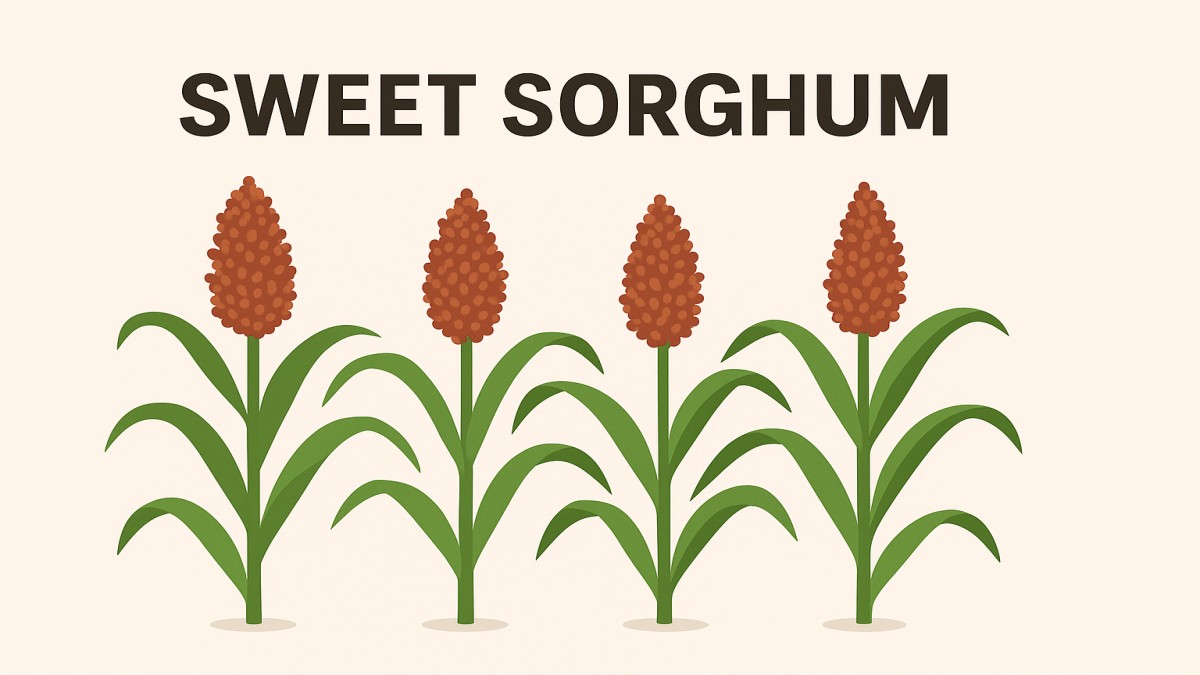
Sweet sorghum typically grows 2–4 meters tall, featuring:
- Thick stalks filled with sugary juice
- Broad leaves similar to corn
- A flowering panicle at the top containing seeds
- Deep roots, allowing it to withstand drought
Its robust root system and adaptability make it suitable for various climates, from tropical to temperate regions.
Difference Between Sweet Sorghum and Grain Sorghum
While both belong to the same species, they differ in purpose and structure:
| Feature | Sweet Sorghum | Grain Sorghum |
|---|---|---|
| Main Use | Juice (sugar, ethanol, syrup) | Grain (food, feed) |
| Stalk | Thick and juicy | Dry and slender |
| Sugar Content | High | Low |
| Harvest Focus | Stem | Seed head |
In essence, sweet sorghum is the “sugarcane cousin” of grain sorghum — more suitable for energy and syrup production.
Climate and Soil Requirements
One of sweet sorghum’s strongest advantages is its adaptability. It thrives in semi-arid to tropical conditions, requiring less water than sugarcane or maize.
Ideal conditions include:
- Temperature: 25°C–35°C (77°F–95°F)
- Rainfall: 400–800 mm annually
- Soil: Well-drained loamy or sandy soils with pH 5.5–8.5
It also tolerates salinity and low fertility, making it an ideal crop for marginal lands where other plants fail.
Nutritional Value of Sweet Sorghum
Sweet sorghum isn’t just an industrial crop it’s also nutritious. Its grains and juice are packed with vitamins, minerals, and antioxidants.
Nutritional highlights:
- High in iron, phosphorus, and calcium
- Gluten-free, suitable for celiac diets
- Rich in fiber and protein
- Contains natural sugars and polyphenols
These attributes make sweet sorghum a valuable food source in addition to its industrial uses.
Uses of Sweet Sorghum
1. Food and Beverages
Sweet sorghum juice is boiled into natural syrup, similar to molasses. The grains are also ground into flour, used in porridge, bread, and snacks. Some cultures ferment the juice into alcoholic beverages.
2. Animal Feed
After juice extraction, the leftover stalks, known as bagasse, serve as nutritious fodder for livestock. Its high fiber and moderate protein content make it excellent for cattle and goats.
3. Biofuel Production
The fermentable sugars in sweet sorghum can be converted into ethanol, providing a sustainable alternative to fossil fuels. This makes it one of the best bioenergy crops for developing countries.
4. Industrial Applications
Sweet sorghum is used in making molasses, vinegar, paper pulp, and biodegradable materials. The versatility of its by-products adds significant economic value.
Conclusion
Sweet sorghum isn’t just another agricultural crop it’s a symbol of sustainable progress. From producing eco-friendly biofuels to providing nutritious food and fodder, this versatile plant has the potential to transform agriculture and energy systems alike.
By embracing sweet sorghum, we move one step closer to a greener, cleaner, and more self-reliant world.
FAQs
1. What makes sweet sorghum different from regular sorghum?
Sweet sorghum has higher sugar content in its stalks, making it ideal for syrup and ethanol production, while regular sorghum is mainly used for grain.
2. Can sweet sorghum replace sugarcane for ethanol production?
Yes, in many regions, sweet sorghum is a sustainable alternative due to its lower water needs and shorter growing cycle.
3. Is sweet sorghum syrup healthy?
It’s rich in minerals and antioxidants, making it a healthier option than refined sugar.
4. How long does sweet sorghum take to grow?
It matures in 3–4 months, faster than most sugar crops.
5. Where is sweet sorghum mostly grown?
It’s widely cultivated in India, China, Africa, and parts of the United States, especially in areas with limited water availability.

Consultative Selling Techniques: A Complete Guide to Building Customer Trust in 2026

Sales Objection Handling: A Complete Guide to Closing More Deals in 2026

Customer Closing Techniques: A Complete Guide to Converting Prospects into Buyers (2026)

Customer Conversion Process: A Complete Guide to Turning Visitors into Loyal Customers (2026)

Sales Funnel Examples: A Complete Guide to Converting More Customers (2026)

Lead Qualification Framework: A Complete Guide to Finding High-Quality Customers (2026)

Website Credibility Factors: A Complete Guide to Building Trust Online (2026)

Online Reputation Monitoring: A Complete Guide to Protecting Your Brand in 2026

Customer Testimonial Strategy: A Complete Guide to Building Trust and Increasing Sales (2026)

Business Storytelling Framework: A Complete Guide to Building Strong Brand Connections (2026)
Consultative Selling Techniques: A Complete Guide to Building Customer Trust in 2026
Sales Objection Handling: A Complete Guide to Closing More Deals in 2026
Customer Closing Techniques: A Complete Guide to Converting Prospects into Buyers (2026)
Customer Conversion Process: A Complete Guide to Turning Visitors into Loyal Customers (2026)
Sales Funnel Examples: A Complete Guide to Converting More Customers (2026)
Lead Qualification Framework: A Complete Guide to Finding High-Quality Customers (2026)
Website Credibility Factors: A Complete Guide to Building Trust Online (2026)
Online Reputation Monitoring: A Complete Guide to Protecting Your Brand in 2026
Customer Testimonial Strategy: A Complete Guide to Building Trust and Increasing Sales (2026)
Business Storytelling Framework: A Complete Guide to Building Strong Brand Connections (2026)

 entertainment1 year ago
PYT Telegram: A Complete Guide to Understanding, Using, and Maximizing It

 entertainment1 year ago
OnionFlix: Everything You Need to Know About This Streaming Website
- education1 year ago
How to Become a Software Engineer: A Complete Guide
- others12 months ago
Nook vs Kindle: Which E-Reader Is Right for You?