others
Vicariously Meaning: Definition, Usage, and Everyday Examples

Have you ever felt joy, excitement, or even fear just by watching someone else experience it? That feeling has a name vicariously. It’s a word that perfectly captures how humans connect emotionally, even when we’re not directly involved.
Let’s break it down in a simple, relatable way.
What Does “Vicariously” Mean?
Simple Definition
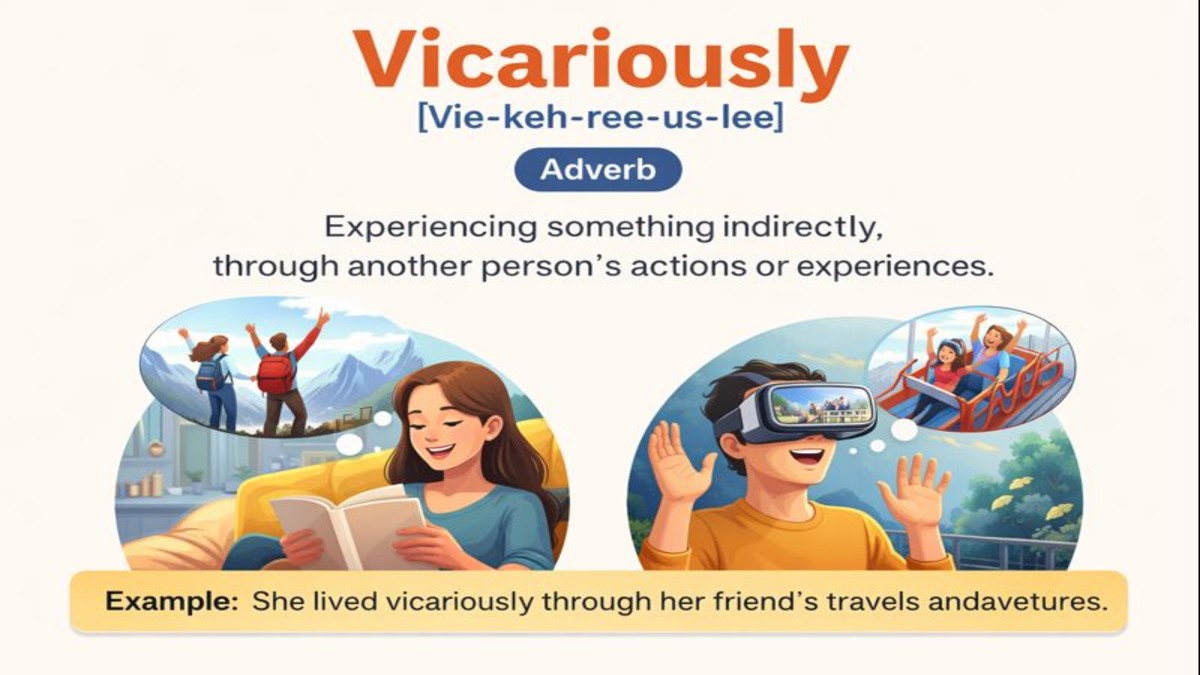
Vicariously means experiencing something through another person instead of directly yourself. You’re not doing the thing, but you feel it as if you were.
For example, parents often feel pride vicariously through their children’s achievements.
Emotional and Experiential Meaning
Beyond actions, vicariously often relates to emotions. You can feel happiness, excitement, fear, or disappointment simply by watching someone else go through it. It’s like emotional secondhand experience.
Origin and History of the Word Vicariously
Latin Roots
The word comes from the Latin vicarius, meaning substitute or one who takes another’s place. That idea of substitution is still at the heart of the word today.
Evolution Into Modern English
Over time, vicariously evolved to describe emotional and experiential substitution—not physical replacement, but emotional participation.
How Vicariously Is Used in Daily Language
Spoken English Examples
In everyday conversations, you’ll hear phrases like:
- “I’m living vicariously through you.”
- “She experiences adventure vicariously through travel shows.”
It’s casual, expressive, and widely understood.
Written and Formal Usage
In writing, vicariously often appears in psychology, education, and storytelling to explain indirect experience.
Vicariously vs Similar Words
Vicariously vs Empathetically
- Vicariously: You experience something through someone else.
- Empathetically: You understand or feel compassion for someone.
You can empathize without living vicariously, but living vicariously always involves emotion.
Vicariously vs Indirectly
“Indirectly” focuses on action. “Vicariously” focuses on experience and feeling.
Common Contexts Where Vicariously Appears
Parenting and Family Life
Parents often live vicariously through their children’s successes, especially when kids achieve dreams parents once had.
Entertainment and Media
Movies, sports, and reality TV allow people to experience drama, adventure, and excitement without real-world risk.
Social Media Influence
Watching influencers travel, succeed, or live lavish lifestyles lets followers experience those moments vicariously—scrolling instead of flying.
Examples of Vicariously in Sentences
Simple Examples
- She felt excitement vicariously through her friend’s promotion.
- I experience travel vicariously through documentaries.
Advanced Examples
- The audience lived vicariously through the hero’s journey.
- Parents sometimes pursue unfulfilled dreams vicariously through their children.
Psychological Meaning of Vicariously
Living Through Others
Psychology explains vicarious experience as a natural human trait. Our brains can mirror emotions we observe in others, making the experience feel real.
Emotional Transfer
This emotional transfer helps build empathy, learning, and connection—but too much can lead to unrealistic expectations or pressure on others.
Common Mistakes When Using Vicariously
A common mistake is using vicariously when someone is directly involved.
Incorrect:
- I vicariously climbed the mountain.
Correct:
- I climbed the mountain.
- I experienced the climb vicariously through photos.
Why Understanding Vicariously Matters
Understanding this word helps you communicate emotional nuance. It explains why stories move us, why parents feel proud, and why we connect so deeply with others’ lives—even from a distance.
Conclusion
Vicariously is a powerful word that captures how humans experience life beyond their own actions. Whether through family, media, or relationships, living vicariously connects us emotionally and socially. Used correctly, it adds depth and clarity to both speech and writing.
FAQs
1. What does vicariously mean in simple terms?
It means experiencing something through someone else.
2. Is vicariously positive or negative?
It can be both, depending on context.
3. Can emotions be felt vicariously?
Yes, emotions are the most common vicarious experiences.
4. Is living vicariously unhealthy?
Not always, but excessive reliance on it can be problematic.
5. Is vicariously used in formal writing?
Yes, especially in psychology, education, and literature.

Shop Easter Basket: The Ultimate Guide to Perfect Easter Gifts

Best Apps to Make Money Online USA (2026 Guide)

How to Start Affiliate Marketing with No Money

Freelance Jobs for Beginners USA (Start with No Experience)

Side Hustle Ideas from Home USA (No Experience Needed) – Beginner’s Guide

Online Jobs from Home USA (Daily Pay) – Start Earning Instantly

Beton Celular Autoclavizat: The Future of Lightweight, Eco-Friendly Construction

Goblets: A Timeless Symbol of Elegance and Celebration

AI Tools for Making Money Online Free (Best 2026 Guide)

Passive Income Apps USA Free: Earn Money Effortlessly in 2026

Ishraq Time in Delhi: What It Is, When It Happens, and Why It Matters
Beton Celular Autoclavizat: The Future of Lightweight, Eco-Friendly Construction

Read OPM Manga Online: Where and How to Enjoy One Punch Man Legally

Technisches Gymnasium: Your Gateway to Engineering and Technology

Why Every Small Business Needs a Digital Marketing Agency
Goblets: A Timeless Symbol of Elegance and Celebration

Gold Shower: Nature’s Cascading Yellow Wonder

The Indian Bow: A Legacy of Precision, Power, and Tradition

Robert Provost: A Life of Leadership, Community, and Vision

Are Political Donations Tax Deductible?
Shop Easter Basket: The Ultimate Guide to Perfect Easter Gifts
Best Apps to Make Money Online USA (2026 Guide)
How to Start Affiliate Marketing with No Money
Freelance Jobs for Beginners USA (Start with No Experience)
Side Hustle Ideas from Home USA (No Experience Needed) – Beginner’s Guide
Online Jobs from Home USA (Daily Pay) – Start Earning Instantly
Beton Celular Autoclavizat: The Future of Lightweight, Eco-Friendly Construction
Goblets: A Timeless Symbol of Elegance and Celebration
AI Tools for Making Money Online Free (Best 2026 Guide)
Passive Income Apps USA Free: Earn Money Effortlessly in 2026

 entertainment7 months ago
PYT Telegram: A Complete Guide to Understanding, Using, and Maximizing It

 entertainment7 months ago
OnionFlix: Everything You Need to Know About This Streaming Website
- others6 months ago
Nook vs Kindle: Which E-Reader Is Right for You?
- gaming7 months ago
Melisandre: The Enigmatic Priestess of Game of Thrones