Health
The Great Saphenous Vein: Anatomy, Function, and Clinical Significance

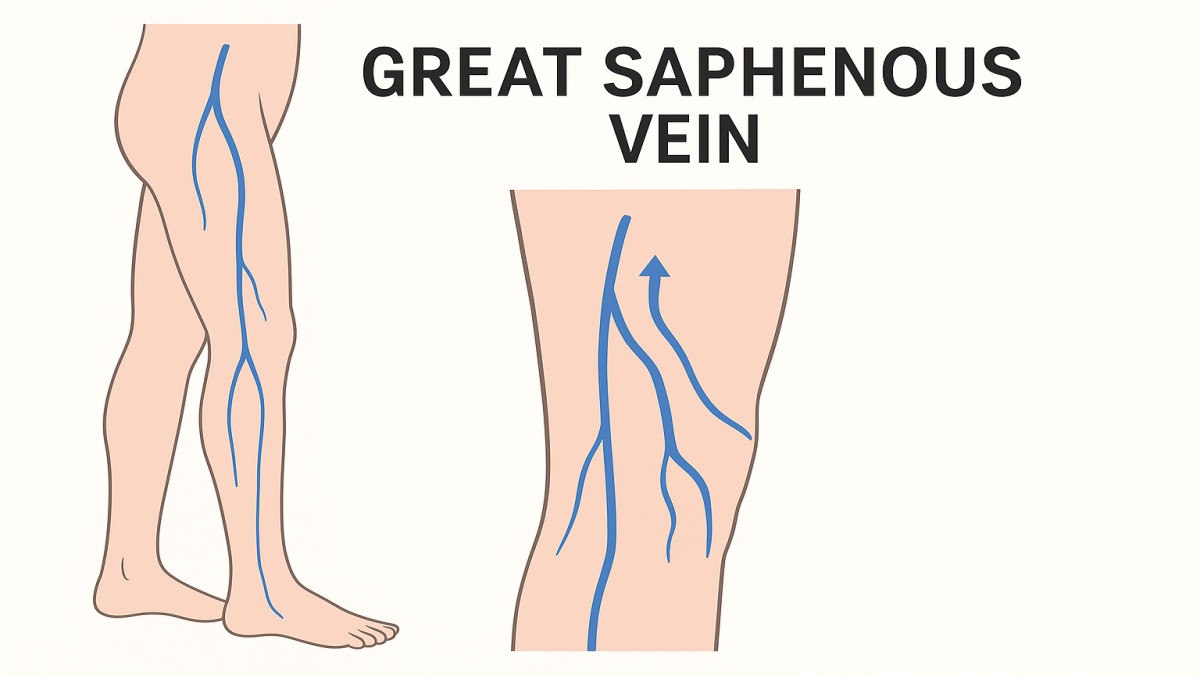
The human body is a masterpiece of intricate networks, and one of its most remarkable circulatory components is the great saphenous vein (GSV). This vein, the longest in the human body, plays a crucial role in venous return and has great clinical importance, particularly in vascular surgery and the diagnosis of venous disorders. Let’s explore its anatomy, function, and the medical relevance it holds.
1. What is the Great Saphenous Vein?
The great saphenous vein, also known as the long saphenous vein, is a large, superficial vein located in the leg. It runs from the foot all the way up to the groin, making it the longest vein in the human body. The term “saphenous” comes from the Greek word safaina, meaning “visible,” aptly describing how this vein often appears beneath the skin.
2. Anatomy and Course of the Great Saphenous Vein
The GSV begins at the medial side of the dorsal venous arch of the foot, just in front of the medial malleolus (the bony prominence on the inner side of the ankle). From there, it ascends along the medial aspect of the leg and thigh, eventually joining the femoral vein at the saphenofemoral junction in the groin.
Key anatomical points:
- Origin: Dorsal venous arch of the foot
- Course: Runs anterior to the medial malleolus, along the medial leg and thigh
- Termination: Femoral vein, near the groin crease
- Length: Approximately 70–90 cm
Throughout its journey, the GSV receives numerous tributaries and communicates with deep veins through perforator veins, ensuring efficient blood flow toward the heart.
3. Structure and Composition
Like other veins, the GSV is composed of three layers:
- Tunica intima – the innermost layer lined with endothelial cells.
- Tunica media – a middle layer of smooth muscle, which helps regulate blood flow.
- Tunica adventitia – an outer connective tissue layer that provides structural support.
Importantly, the GSV contains numerous one-way valves that prevent backflow of blood, helping counteract gravity and maintain upward venous return from the legs.
4. Function of the Great Saphenous Vein
The main function of the GSV is to drain deoxygenated blood from the superficial tissues of the leg and thigh and channel it into the deep venous system via the femoral vein. This contributes to maintaining proper venous return—a vital aspect of circulation.
5. Relationship with the Deep Venous System
Although it is a superficial vein, the GSV works closely with the deep venous system, especially through perforator veins that connect the two. This collaboration ensures that excess blood from the surface veins can efficiently return to the deep system and ultimately to the heart.
6. Common Clinical Conditions Involving the GSV
The great saphenous vein is often affected by various venous disorders. Some of the most common include:
a. Varicose Veins
Perhaps the most well-known condition involving the GSV, varicose veins occur when the vein’s valves become incompetent, leading to venous reflux. Blood pools in the vein, causing it to enlarge, twist, and appear prominently beneath the skin. This can cause discomfort, swelling, and aesthetic concerns.
b. Chronic Venous Insufficiency (CVI)
CVI occurs when the GSV and other veins fail to efficiently return blood to the heart, leading to leg swelling, skin changes, and sometimes venous ulcers.
c. Thrombophlebitis
This is the inflammation of a vein caused by a blood clot. Superficial thrombophlebitis of the GSV can result from prolonged immobility, intravenous therapy, or trauma.
d. Saphenous Vein Reflux
This condition involves the backward flow of blood through the GSV, often contributing to varicose veins and leg heaviness.
Conclusion
The great saphenous vein is not only vital to the circulatory system but also a cornerstone of modern vascular and cardiac surgery. Whether functioning as part of the body’s natural venous return or serving as a graft in life-saving procedures, the GSV’s role is indispensable. Understanding its structure, function, and clinical importance helps us appreciate the remarkable design of the human body.
FAQs
1. Why is it called the great saphenous vein?
Because it is the largest and longest superficial vein in the human body, visible beneath the skin.
2. Can you live without your great saphenous vein?
Yes. The deep venous system can compensate for its removal, which is why it’s often used in bypass surgery.
3. What are the symptoms of great saphenous vein problems?
Common symptoms include leg pain, swelling, heaviness, and visible varicose veins.
4. How is varicose vein surgery performed?
It can be treated through laser ablation, radiofrequency ablation, or surgical stripping, depending on severity.
5. Is great saphenous vein removal safe?
Yes, it’s a routine and safe procedure when performed by skilled vascular surgeons.

Consultative Selling Techniques: A Complete Guide to Building Customer Trust in 2026

Sales Objection Handling: A Complete Guide to Closing More Deals in 2026

Customer Closing Techniques: A Complete Guide to Converting Prospects into Buyers (2026)

Customer Conversion Process: A Complete Guide to Turning Visitors into Loyal Customers (2026)

Sales Funnel Examples: A Complete Guide to Converting More Customers (2026)

Lead Qualification Framework: A Complete Guide to Finding High-Quality Customers (2026)

Website Credibility Factors: A Complete Guide to Building Trust Online (2026)

Online Reputation Monitoring: A Complete Guide to Protecting Your Brand in 2026

Customer Testimonial Strategy: A Complete Guide to Building Trust and Increasing Sales (2026)

Business Storytelling Framework: A Complete Guide to Building Strong Brand Connections (2026)
Consultative Selling Techniques: A Complete Guide to Building Customer Trust in 2026
Sales Objection Handling: A Complete Guide to Closing More Deals in 2026
Customer Closing Techniques: A Complete Guide to Converting Prospects into Buyers (2026)
Customer Conversion Process: A Complete Guide to Turning Visitors into Loyal Customers (2026)
Sales Funnel Examples: A Complete Guide to Converting More Customers (2026)
Lead Qualification Framework: A Complete Guide to Finding High-Quality Customers (2026)
Website Credibility Factors: A Complete Guide to Building Trust Online (2026)
Online Reputation Monitoring: A Complete Guide to Protecting Your Brand in 2026
Customer Testimonial Strategy: A Complete Guide to Building Trust and Increasing Sales (2026)
Business Storytelling Framework: A Complete Guide to Building Strong Brand Connections (2026)

 entertainment1 year ago
PYT Telegram: A Complete Guide to Understanding, Using, and Maximizing It

 entertainment1 year ago
OnionFlix: Everything You Need to Know About This Streaming Website
- education1 year ago
How to Become a Software Engineer: A Complete Guide
- others12 months ago
Nook vs Kindle: Which E-Reader Is Right for You?