
business
Ladder to Lights: How to Start a Christmas Light Business

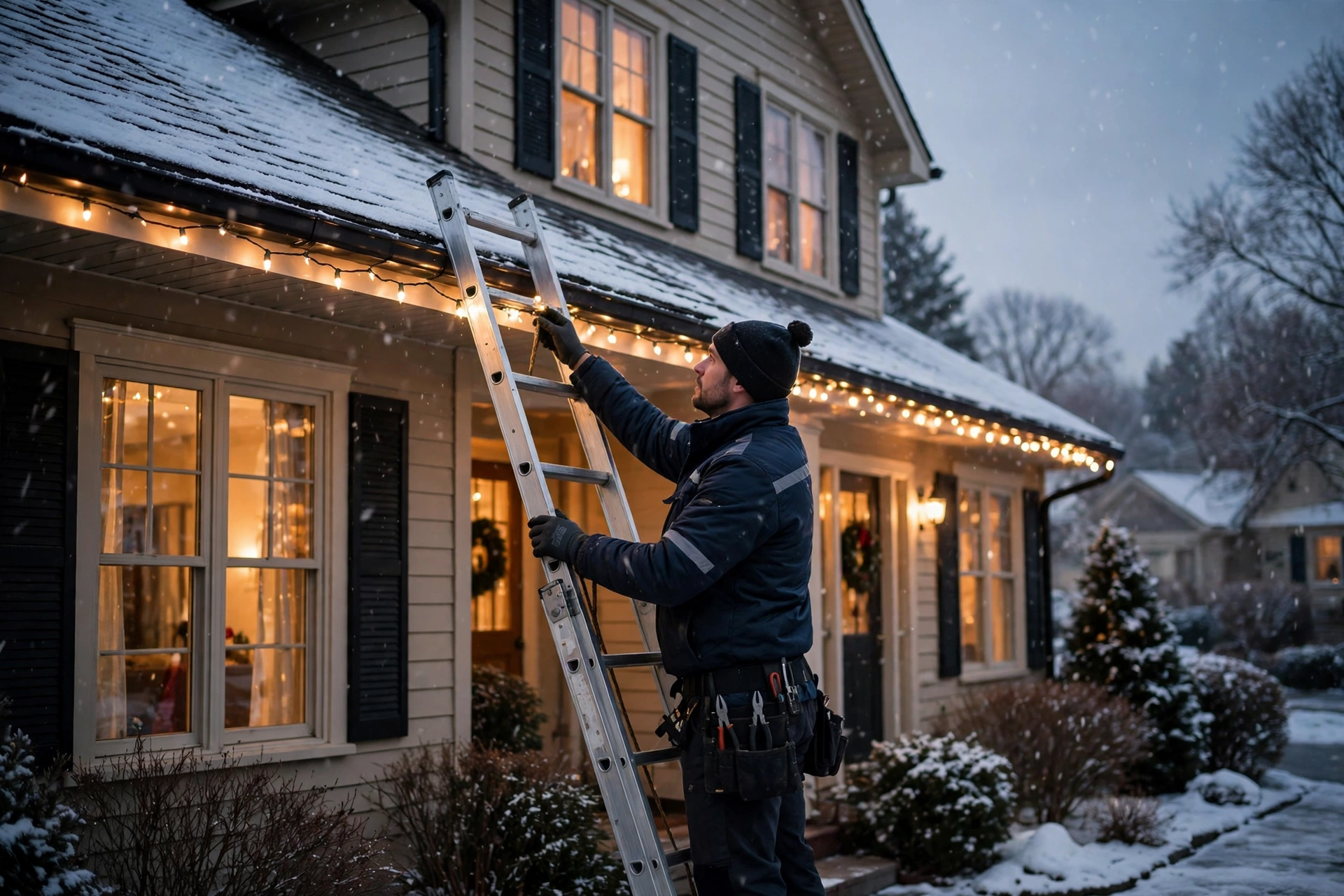
Every November, the same thing happens in every neighbourhood. The evenings get dark early, the first cold snap arrives, and suddenly every other house on the street is glowing. Homeowners love the look of a well-lit house at Christmas, but most of them do not own a tall enough ladder, do not want to spend a freezing Saturday on a roof, and do not know how to hang lights without damaging their gutters. That gap is your opportunity. If you are looking for a seasonal business with low startup costs, fast cash flow and happy customers, learning how to start a Christmas light business could be one of the smartest moves you make this year.
A Christmas light business is simple at its core. You design, install, maintain, take down and store holiday lighting for homes and commercial properties. The season is short — most of the money is made between late October and mid-December — but the margins are strong, the work is visible, and a customer who is happy this Christmas will usually book you again next Christmas. In this guide, you will learn how to start a Christmas light business step by step, from your first ladder to your first paying route.
Step 1: Decide What Kind of Christmas Light Business You Want
Before you buy a single bulb, decide what you will actually sell. Most beginners start with residential Christmas light installation for single-family homes: rooflines, gutters, trees, bushes and walkways. It is the easiest work to learn, the easiest to price, and the easiest to find customers for. A Christmas light installation business that focuses on homes can be run by one person with a ladder and a van.
The other market is commercial Christmas light installation — shops, restaurants, offices, shopping centres and hotels. Commercial jobs pay far more per job, but they also need bigger crews, bigger insurance cover and work at height on larger buildings. Many installers start residential in year one and add commercial work in year two, once they have the team and the track record. Commercial Christmas light installation clients — shops and restaurants in particular — often rebook earliest, because their displays are part of their Christmas trading. Either way, pick one market to start with and get good at it before you try to serve everyone.
Step 2: Write a Simple Business Plan
You do not need a 40-page document. You need a one-page plan that answers five questions: who are your customers, what exactly will you install, what will you charge, how will you find customers, and what will it cost you to start? Write the answers down before you spend money. A short written plan keeps you honest about costs and stops you buying gear you do not need yet.
Your plan should also set a target for the season. A realistic first-season goal for a one-person operation is 30 to 50 homes. At an average ticket of several hundred dollars per home, that is a meaningful seasonal income — and it is achievable if you start marketing in October, when homeowners are already thinking about the holidays.
Step 3: Register the Business and Check Local Rules
Choose a business name that is easy to spell, easy to remember and easy to read on a van door. Register the business in the form that fits your situation — many small installers start as a sole trader or a single-member LLC — and open a separate business bank account so your business money never mixes with your household money.
Then check the local rules. In most places, hanging temporary plug-in holiday lights does not need an electrician’s licence, because you are not changing the building’s wiring. But rules vary by city and state, and some towns require a general business licence to trade within their limits. If a job involves hard-wiring or altering electrical circuits, leave that part to a licensed electrician. A quick call to your local council or licensing office before your first job saves you trouble later.
Step 4: Get Insurance Before You Climb
This is the step beginners most often skip, and it is the one that matters most. You will be working on ladders, near roof edges, in cold and wet weather, around electrical equipment. One slip, one broken gutter, one damaged roof tile can turn a profitable season into a very expensive lesson. Christmas light installation insurance — general liability cover — is non-negotiable. Expect to pay roughly $500 to $1,000 a year for a basic policy, and check whether your policy covers work at height. Christmas light installation insurance also covers accidental damage to a customer’s property, such as a cracked tile or a broken gutter bracket, so read the cover carefully before you buy.
If you hire helpers, even for a few weekends, check whether your area requires workers’ compensation cover. Tell your insurer exactly what you do; a policy written for a cleaner or a gardener will not necessarily cover ladder work on a roof. Get the cover in place before you take your first booking, not after.
Step 5: Buy the Right Gear — and Not Too Much of It
Your first-season shopping list is shorter than most people think. You need a sturdy extension ladder (a 24 to 28-foot ladder covers most two-storey homes), a smaller step ladder, commercial-grade LED lights, clips, extension cords, timers, a tape measure, a drill, work gloves and a vehicle that can carry it all. The gear your Christmas light installation work needs most is good lights: commercial-grade C9 LED bulbs on empty socket line, cut to length, look far better and last far longer than retail boxed sets, and your customers will notice the difference.
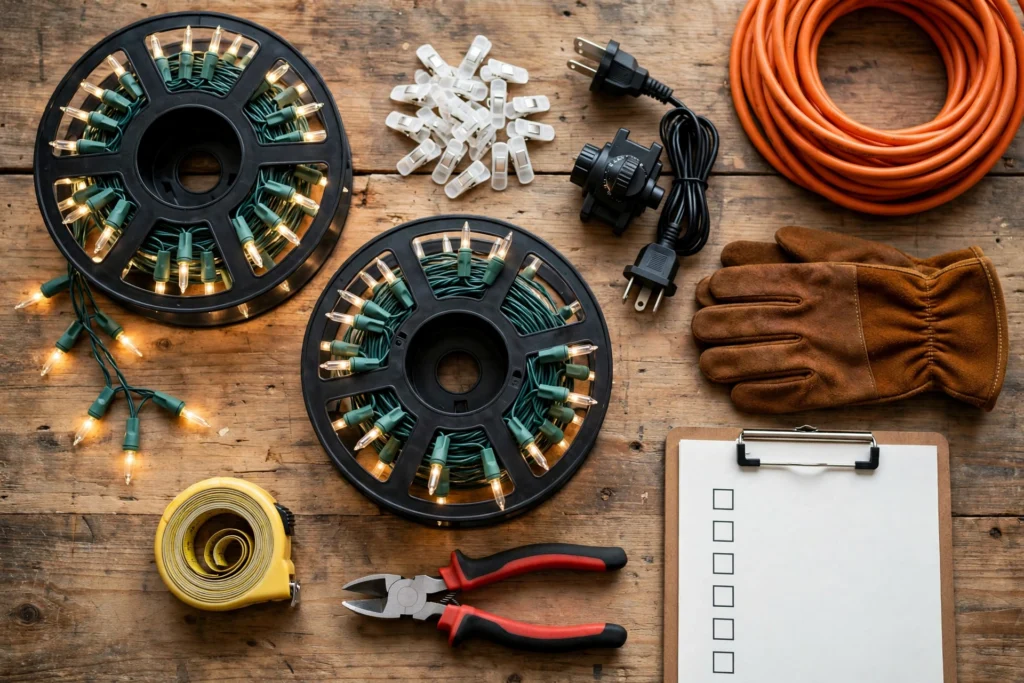
Start with a modest stock of lights and let customer deposits fund more. A common beginner mistake is buying thousands of dollars of inventory before a single booking. Instead, buy enough for your first ten jobs, take a 50% deposit on every booking, and use those deposits to buy the lights for the next ten. Your Christmas light installation kit should grow with your order book, not ahead of it. Store everything labelled by job, in sealed bins, so next season’s setup is fast.
Step 6: Learn How to Price Christmas Light Installation
Pricing is where most new installers either leave money on the table or scare customers away. Learning how to price Christmas light installation starts with understanding the two common models. In the labour-only model, the customer buys or already owns the lights and you charge for design, installation and takedown. In the full-service model, you supply commercial-grade lights as part of an annual package that includes installation, maintenance, takedown and storage — and the customer pays a higher price for a hands-off service. The full-service model earns more per customer and creates repeat bookings, so most successful installers move towards it.
So how much does Christmas light installation cost the customer? A straightforward question, and the honest answer is that it depends on the size of the house, the length of roofline, the type of lights and whether the price includes takedown and storage. As a rough guide, simple single-storey installs often start at a few hundred dollars, while large two-storey homes with trees and garden features can run into the low thousands. Many installers charge per linear foot for the roofline plus a fixed fee for trees and features, with a minimum charge — often around $350 — so small jobs stay worth doing. When a homeowner asks for a price, give a clear written quote that separates installation, takedown and storage, and state whether the lights are included. The total Christmas light installation cost should never be a surprise to the customer, and it should never be a surprise to you either: measure the roofline, count the features, and quote from the measurements, not from a guess.
Step 7: Offer Christmas Light Installation Services People Can Understand
Your Christmas light installation services should be packaged so a homeowner can choose in thirty seconds. A simple menu works best: a roofline package, a roofline-plus-trees package, and a full-property package. Each package should state what is included — design, lights, installation, maintenance visits if a bulb fails, takedown in January and storage until next year. Clear packages make quoting faster, make your marketing clearer and make it easier for happy customers to recommend you to a neighbour. That is the difference between a hobby and a Christmas light installation business that earns real money.
Outdoor Christmas light installation is not only about rooflines. Trees wrapped in lights, bushes outlined, wreaths lit on doors, pathways lined and garden features highlighted all add to a job’s value and to its photograph — and photographs are your best marketing. Outdoor Christmas light installation in wet weather needs care with connections, so keep plugs off the ground and use outdoor-rated extension leads. Ask every happy customer if you can photograph their house at dusk for your portfolio, and collect those photos from your very first job.
Step 8: Find Your First Customers Before November
The biggest mistake in this business is starting to market in December, when the best installers are already booked solid. Good installers are usually fully booked by early November, so your marketing must start in October — or even late September. Start with the people you already know: neighbours, family, local Facebook groups and community noticeboards. Offer a small discount to your first five customers in exchange for honest reviews and permission to photograph their homes.
Then go local and visible. Door hangers in the streets you want to work in, a simple Google Business Profile with photos of your work, and a one-page website with your packages and a quote form will bring in far more enquiries than a social media account alone. Most of your first-season work will be residential Christmas light installation, so price the home packages first and add commercial packages later. Leaflet the streets with the biggest, brightest houses — those homeowners already spend money on their homes at Christmas. Follow up every quote within 24 hours, because in a short season, a slow reply is a lost job.
Step 9: Do Installs That Earn Repeat Bookings
Your reputation in this business is built one roofline at a time. Arrive on time, protect the customer’s gutters with the right clips, keep cables tidy and hidden, test every strand before you leave, and set timers so the lights come on at dusk and off at bedtime. Walk the customer around the finished job at dusk if you can — seeing the house lit for the first time is the moment they become a fan, and fans refer friends.
Keep a simple record for every job: the measurements, the number of strands, the clip types, photos and any notes about tricky access. That record is what makes next year’s reinstall fast and profitable, and it is what lets you offer a returning-customer price that still earns you good money. A customer who pays you this Christmas can return next Christmas, and the Christmas after that — repeat customers are the real asset of this business.
Step 10: Plan Takedown, Storage and Next Season
Removal is part of the job, not an afterthought — in fact, takedown and storage can be a large share of your revenue if you price them in from the start. Schedule takedown in January, before the weather turns, and agree the date with the customer when you install, not in a phone call in February. Take the lights down carefully, label every strand by house and location, coil them properly and store them in dry, sealed bins.
Then use the quiet months well. Send a thank-you message to every customer, ask for a review while the memory is fresh, and offer an early-booking discount for next season. February and March are the right time to service your ladders, replace worn gear and plan your marketing for the autumn. A seasonal business still needs a twelve-month calendar — the businesses that do best are the ones that treat January to September as preparation, not as time off.
Mistakes That Kill a New Christmas Light Business
The first mistake is under-pricing. If your price does not cover your time on the ladder, your fuel, your insurance and your takedown visit, you are buying yourself a job that pays less than a day’s labour. Always include takedown and storage in the quote, and always charge a minimum.
The second mistake is buying too much inventory too soon. Let deposits fund your stock. The third mistake is skipping insurance or using the wrong clips and damaging a gutter — one claim or one angry customer costs far more than the right cover and the right fixings. The fourth mistake is marketing too late. If you start in December, the season is already half gone. And the fifth mistake is forgetting the customer after the install: no follow-up, no review request, no early-booking offer means you start every season from zero.
Frequently Asked Questions
How much does Christmas light installation cost for a typical house?
How much does Christmas light installation cost depends on the size of the home and the scope of the display. Simple single-storey rooflines often start at a few hundred dollars, while larger two-storey homes with trees, bushes and garden features can cost well into the low thousands. Always get a written quote that separates installation, takedown and storage, and ask whether the lights are supplied or customer-owned.
Do I need a licence to install Christmas lights?
In most places, hanging temporary plug-in holiday lights does not need an electrician’s licence, because you are not altering the building’s wiring. Some towns require a general business licence, and any hard-wiring work should be done by a licensed electrician. Check your local rules before your first job.
How much money do I need to get started?
Many installers start with $500 to $5,000: a good extension ladder, basic tools, a first stock of commercial-grade LED lights, clips, cords and timers, plus insurance. Taking a 50% deposit on every booking lets customer payments fund your growing stock instead of your savings.
When should I start marketing my Christmas light business?
Start in October at the latest, and late September is better. Good installers are usually booked solid by early November, so the businesses that win the season are the ones that market while homeowners are only just thinking about the holidays.
Is a Christmas light business profitable?
It can be, because the margins are strong: experienced installers commonly report gross margins of 60 to 70% on installation work, and repeat customers plus takedown and storage fees add steady revenue to a short season. Profit depends on pricing your jobs properly, keeping your inventory lean and getting customers to rebook — so price every job from measurements, not from a guess.
Final Word
A Christmas light business is one of the most satisfying seasonal businesses you can start: low startup costs, visible results, happy customers and a short, intense season that leaves the rest of the year free. The formula is simple, but it only works if you follow it in order — pick your market, get insured, buy modestly, price from measurements, market early and look after the takedown. Do that, and this Christmas could be the season your ladder starts paying for itself. Now you know how to start a Christmas light business — the next step is to pick your first street, print your first flyers and book your first five homes before November arrives.

Ladder to Lights: How to Start a Christmas Light Business

Clear Water, Steady Pay: Starting a Pool Cleaning Business

Green Thumb to Paycheck: Starting a Landscaping Business

Turn Winter Into Income: How to Start a Snow Removal Business

How to Start a Handyman Business: Simple Steps That Turn Your Skills Into Income

How to Start a Moving Company: Simple Steps That Win Your First Jobs

How to Start a Junk Removal Business: A Simple Step-by-Step Guide

How to Start a Pest Control Business: Simple Steps That Win Your First Customers

How to Start a Carpet Cleaning Business: Simple Steps

How to Start a Gutter Cleaning Business: Simple Steps That Turn Your Ladder Into Income

How to Repurpose Blog Content for Social Media Without Starting From Scratch

How to Write a Simple Business Plan for Your Small Business: A Practical Guide That Gets You Started

How to Create a Small Business Content Marketing Plan That Actually Gets Results

How to Get More Clients for Your Business: Simple Ways That Actually Work

How to Write a Professional Business Email That Gets a Reply
How to Handle Customer Complaints in a Small Business: A Calm, Practical Guide That Turns Problems Into Loyalty
How to Create a Content Calendar for a Small Business

Branding Tips for Small Businesses: A Simple Guide That Makes You Memorable
How to Set Up a Simple Referral Program for Your Small Business: A Beginner’s Guide That Brings in New Customers

How to Set SMART Goals for a Small Business: A Practical Guide That Actually Works
Ladder to Lights: How to Start a Christmas Light Business
Clear Water, Steady Pay: Starting a Pool Cleaning Business
Green Thumb to Paycheck: Starting a Landscaping Business
Turn Winter Into Income: How to Start a Snow Removal Business
How to Start a Handyman Business: Simple Steps That Turn Your Skills Into Income
How to Start a Moving Company: Simple Steps That Win Your First Jobs
How to Start a Junk Removal Business: A Simple Step-by-Step Guide
How to Start a Pest Control Business: Simple Steps That Win Your First Customers
How to Start a Carpet Cleaning Business: Simple Steps
How to Start a Gutter Cleaning Business: Simple Steps That Turn Your Ladder Into Income

 entertainment1 year ago
PYT Telegram: A Complete Guide to Understanding, Using, and Maximizing It

 entertainment1 year ago
OnionFlix: Everything You Need to Know About This Streaming Website
- education1 year ago
How to Become a Software Engineer: A Complete Guide
- entertainment10 months ago
Brainrot Memes: The Unhinged Humor of the Internet Generation





