Health
Longjing Tea: China’s Legendary Dragon Well Treasure

Introduction
When you think of Chinese green tea, one name often stands above the rest Longjing Tea, also known as Dragon Well Tea. Famous for its smooth, chestnut-like flavor and exquisite aroma, Longjing isn’t just a beverage; it’s a centuries-old tradition that embodies Chinese artistry and culture. Sipped by emperors, praised by poets, and treasured by tea connoisseurs, Longjing tea remains one of the world’s most iconic green teas.
What Is Longjing Tea?
Longjing tea (龙井茶) literally translates to “Dragon Well tea.” It’s a pan-roasted green tea from Hangzhou, in the Zhejiang Province of China. Known for its flat, smooth leaves and delicate flavor, this tea is often hand-processed, maintaining the craftsmanship that has made it famous for over a thousand years.
Unlike fermented teas like black or pu-erh, Longjing is unoxidized, preserving its natural color and nutrients. The result? A refreshing, vibrant green brew that’s as soothing as it is energizing.
The Legend Behind Longjing Tea
Every great tea comes with a great story. Legend has it that during the Ming Dynasty, a dragon lived in a well in the West Lake area of Hangzhou. Villagers prayed to the dragon spirit for rain during a drought — and miraculously, the rain came. Since then, the well and the tea grown nearby became known as “Dragon Well” or Longjing tea.
Another tale involves Emperor Qianlong of the Qing Dynasty, who visited Hangzhou and fell in love with the tea’s aroma. When he later received the same tea in Beijing, he declared it the imperial tribute tea, sealing Longjing’s place in history.
Origin and Growing Region
Longjing tea is exclusively grown around West Lake (Xihu) in Hangzhou, a region known for its mild climate, fertile soil, and misty hills — perfect for nurturing high-quality tea leaves.
There are six famous Longjing-producing villages, with the most prized being Lion Peak (Shifeng), Meijiawu, and Longjing Village itself. Authentic West Lake Longjing is protected by China’s geographical indication status, similar to how Champagne is protected in France.
How Longjing Tea Is Made
Producing authentic Longjing tea is an art form. The process is both delicate and time-consuming, requiring patience and precision.
5.1 Harvesting
The finest Longjing tea is picked in early spring, often around Qingming Festival (April 4–6). Only young, tender buds and the first leaves are plucked — the fresher, the better.
5.2 Pan-Firing and Hand-Roasting
After picking, the leaves are pan-fired in large woks to stop oxidation. Skilled artisans use their bare hands to press and shape the leaves into flat, smooth blades. This signature step gives Longjing its unique appearance and toasted aroma.
Distinct Characteristics of Longjing Tea
Appearance
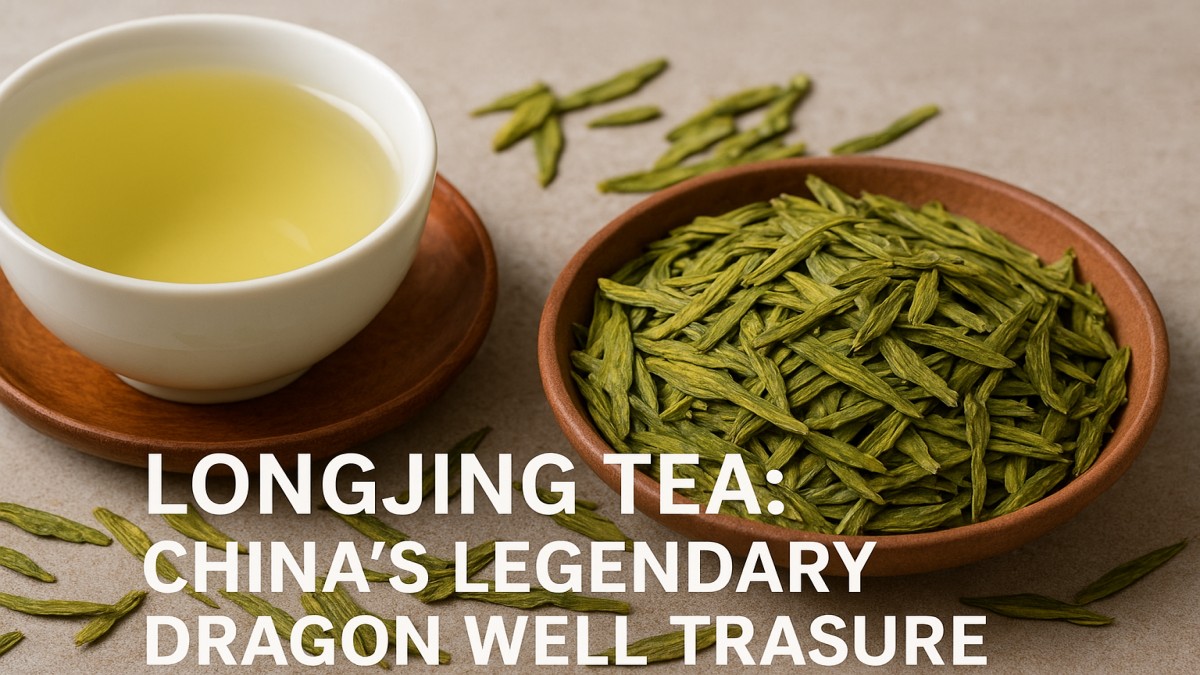
Longjing leaves are flat, slender, and jade-green — resembling polished pine needles.
Aroma
Expect a fresh, chestnut-like scent with hints of orchid and sweetness.
Flavor
The taste is mellow, slightly nutty, and subtly floral, with a silky texture and no bitterness if brewed properly.
Liquor Color
A beautiful pale green to golden-yellow hue, symbolizing purity and vitality.
Varieties of Longjing Tea
Longjing tea can be categorized based on region and quality:
- Shifeng Longjing (Lion Peak): Most premium and aromatic.
- Meijiawu Longjing: Balanced and smooth flavor.
- Xihu Longjing: The official designation for authentic West Lake tea.
- Qiantang Longjing: Grown outside West Lake but still high quality.
- Yu Qian & Ming Qian Longjing: Classified by harvest time, with Ming Qian being the earliest and most delicate.
Conclusion
Longjing tea isn’t just another green tea it’s a masterpiece born from centuries of Chinese craftsmanship, nature, and legend. With its nutty aroma, golden-green liquor, and countless health benefits, Longjing stands as a symbol of harmony between humans and nature. Every sip tells a story — one of mountains, mist, and mastery.
So next time you brew a cup of Dragon Well tea, take a moment to appreciate not just the flavor but the legacy it carries.
FAQs
1. What makes Longjing tea special?
Its flat leaves, chestnut aroma, and centuries-old hand-roasting method make it unique.
2. Does Longjing tea contain caffeine?
Yes, but in moderate amounts — it provides gentle energy without causing restlessness.
3. How long can Longjing tea be stored?
Up to one year if kept in a cool, airtight container away from sunlight and moisture.
4. Is Longjing tea suitable for weight loss?
Yes, it boosts metabolism and helps burn fat naturally when combined with a healthy lifestyle.
5. What is the best time to drink Longjing tea?
Morning or early afternoon, when its antioxidants and energy-boosting effects are most beneficial.

Freelance Jobs for Beginners USA (Start with No Experience)

Side Hustle Ideas from Home USA (No Experience Needed) – Beginner’s Guide

Online Jobs from Home USA (Daily Pay) – Start Earning Instantly

Beton Celular Autoclavizat: The Future of Lightweight, Eco-Friendly Construction

Goblets: A Timeless Symbol of Elegance and Celebration

AI Tools for Making Money Online Free (Best 2026 Guide)

Passive Income Apps USA Free: Earn Money Effortlessly in 2026

How to Earn Money from Home Without Investment

ChatGPT Alternatives Free No Login (2026 Guide)

Everything You Need to Know About Koeas

Ishraq Time in Delhi: What It Is, When It Happens, and Why It Matters
Beton Celular Autoclavizat: The Future of Lightweight, Eco-Friendly Construction

Read OPM Manga Online: Where and How to Enjoy One Punch Man Legally

Technisches Gymnasium: Your Gateway to Engineering and Technology

Why Every Small Business Needs a Digital Marketing Agency
Goblets: A Timeless Symbol of Elegance and Celebration

Gold Shower: Nature’s Cascading Yellow Wonder

The Indian Bow: A Legacy of Precision, Power, and Tradition

Robert Provost: A Life of Leadership, Community, and Vision

Are Political Donations Tax Deductible?
Freelance Jobs for Beginners USA (Start with No Experience)
Side Hustle Ideas from Home USA (No Experience Needed) – Beginner’s Guide
Online Jobs from Home USA (Daily Pay) – Start Earning Instantly
Beton Celular Autoclavizat: The Future of Lightweight, Eco-Friendly Construction
Goblets: A Timeless Symbol of Elegance and Celebration
AI Tools for Making Money Online Free (Best 2026 Guide)
Passive Income Apps USA Free: Earn Money Effortlessly in 2026
How to Earn Money from Home Without Investment
ChatGPT Alternatives Free No Login (2026 Guide)
Everything You Need to Know About Koeas

 entertainment7 months ago
PYT Telegram: A Complete Guide to Understanding, Using, and Maximizing It

 entertainment7 months ago
OnionFlix: Everything You Need to Know About This Streaming Website
- others6 months ago
Nook vs Kindle: Which E-Reader Is Right for You?
- gaming7 months ago
Melisandre: The Enigmatic Priestess of Game of Thrones